
How to Choose a Depo-Provera Lawyer: 7 Questions That Separate Good Attorneys from Great Ones
Published May 9, 2026
The Short Answer
Choosing the right Depo-Provera attorney isn't just about finding someone who'll take your case — it's about finding someone with genuine MDL experience, real resources, and a transparent fee structure. These 7 questions will help you evaluate any attorney and identify red flags before you sign anything.
Nancy's Search: "I Didn't Know What Questions to Ask"
Nancy G. was 56 years old when she was diagnosed with a Grade II meningioma after 12 years of Depo-Provera use. She had surgery, recovered slowly, and eventually started searching for an attorney. She called three firms before she made a decision — and almost signed with the wrong one.
"The first firm I called was very enthusiastic," Nancy said. "They told me my case was worth a lot and I should sign right away. But when I asked them about MDL experience, they couldn't tell me how many Depo-Provera cases they'd filed. That was a red flag."
Nancy's eventual attorney — from a firm with documented mass tort experience — had a different approach. They answered every question she asked, explained the MDL structure clearly, and told her upfront what they couldn't promise. She signed within the week, not because they sold her, but because they earned her trust. This guide gives you the questions she wished she'd known from the start.
"The right attorney didn't try to close me on the first call. They answered every question I had — including the uncomfortable ones about fees and realistic timelines."
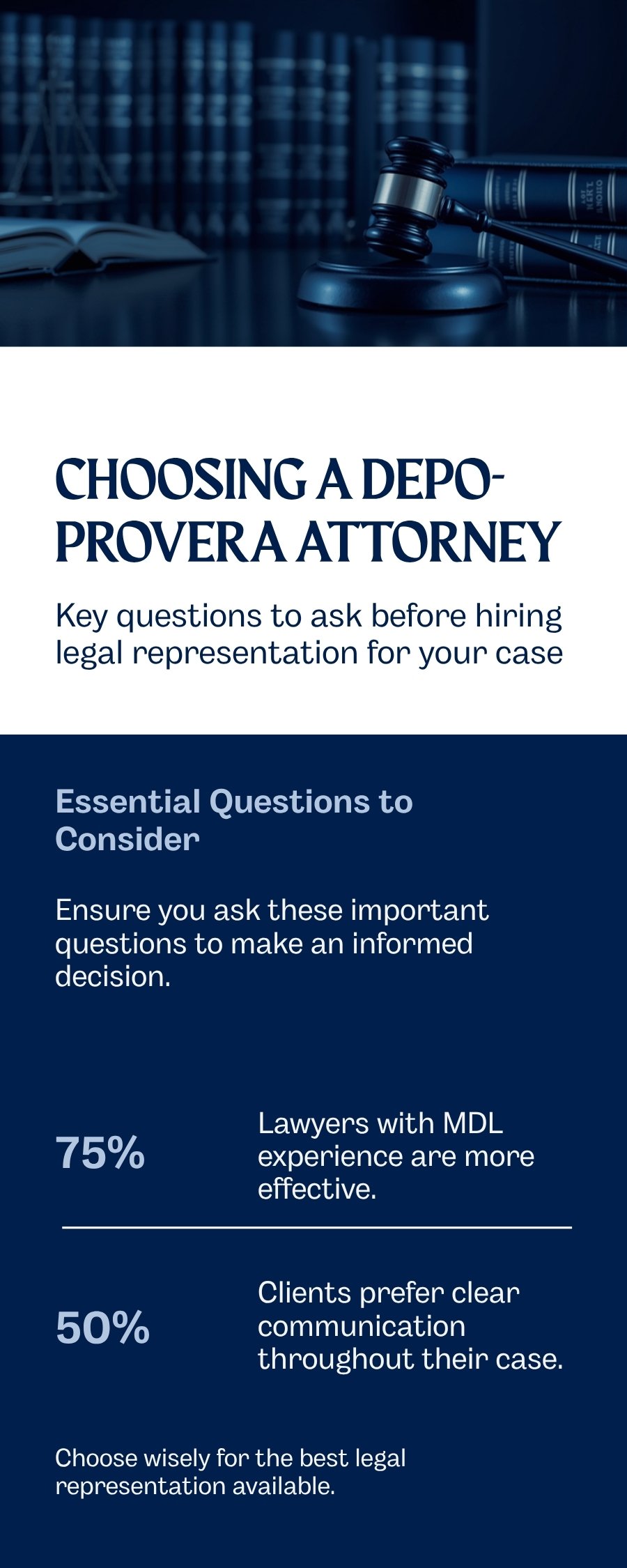
The 7 Questions to Ask Every Depo-Provera Attorney
"Have you filed cases in the Depo-Provera MDL?"
The Depo-Provera MDL is MDL No. 3:23-md-03012 in the Northern District of Illinois. A firm with genuine MDL experience can answer this specifically. They should know the case number, the presiding judge, and the current status of the litigation.
"Will your firm handle my case, or will it be referred to another firm?"
Many law firms that advertise heavily are actually lead generators — they accept your case and refer it to a different firm that does the actual work. This is legal, but you deserve to know. Ask who will actually be litigating your case and who you'll communicate with.
"What is your contingency fee percentage — and what does it cover?"
Standard mass tort contingency fees range from 33% to 40% of your gross recovery. Some firms charge more if the case goes to trial. Ask whether costs (filing fees, expert witnesses, deposition costs) are deducted from your recovery before or after the fee is calculated.
"What is a realistic timeline for my case?"
A trustworthy attorney will give you a realistic, honest timeline — not an optimistic sales pitch. The Depo-Provera MDL has a bellwether trial scheduled for December 2026 and global settlement negotiations likely in 2027. Expect 3–5 years total from filing to payout.
"What do you estimate my case is worth?"
A good attorney will give you a range based on your injury severity, grade, and treatment history — while being clear that no guarantees can be made before a settlement is reached. A bad attorney will give you an inflated number to close the sale.
"How will you communicate with me throughout the case?"
Mass tort cases run for years with long quiet periods punctuated by important events. You want an attorney who commits to a communication cadence — quarterly updates at minimum — and who tells you in advance that there will be long stretches with no news. Silence is normal; being abandoned is not.
"What happens if I want to change attorneys?"
You have the right to fire your attorney at any time. Ask upfront what happens to your file and whether you'd owe any money. In most contingency cases, you don't pay for work done if you fire the attorney before resolution — the original attorney may share in the eventual fee if their work contributed to the outcome, but you don't write a check.
Absolute Red Flags — Walk Away Immediately
- Upfront fees of any kind. Legitimate mass tort attorneys work on contingency — zero money from you, ever, unless you win.
- Guaranteed settlement amounts. No attorney can ethically promise a specific dollar amount before the case resolves.
- High-pressure "sign today" tactics. Artificial urgency is a sales technique, not legal advice. Take time to evaluate.
- Fee percentages above 40%. This is above the standard mass tort range and may indicate a less experienced or less ethical firm.
- Refusal to put the fee agreement in writing. All fee arrangements must be in a written retainer agreement. Never agree verbally.
- Inability to name the MDL or explain its current status. If they can't explain basic MDL facts, they may not have real Depo-Provera experience.
Frequently Asked Questions
Should I hire a local attorney or a national mass tort firm?
What is a typical contingency fee for a Depo-Provera lawsuit?
Can I switch attorneys if I'm unhappy?
Is a free consultation actually free?
Will the attorney I speak with actually handle my case?
Should I be worried about firms that advertise heavily on TV?
Related Depo-Provera Legal Guides
How Long Does a Depo-Provera Lawsuit Take?
A realistic timeline from filing to payout — what to expect from your attorney over 3–5 years.
Evidence GuideWhat Evidence Do You Need?
The complete record-gathering guide — what your attorney needs and what you can gather yourself.
Settlement GuideHow a Global Settlement Works
When Pfizer settles — how claims are allocated and when you get paid.
Structure GuideClass Action vs. MDL Explained
Why the MDL structure produces better individual outcomes — and what your attorney should know about it.
Ask the Right Questions. Get the Right Attorney. Get the Right Result.
Every Depo-Provera plaintiff deserves an attorney who fights for their individual maximum — not just another file to close. A free consultation with a vetted mass tort firm costs nothing and obligates you to nothing.
Start With a Free Case Review →Contingency fee — you pay nothing unless we win. No upfront costs. No obligation.