
Depo-Provera Meningioma Grade I, II, and III: What Your Diagnosis Means for Your Health and Your Lawsuit
Published May 9, 2026
The Short Answer
Your meningioma grade — determined by pathology after biopsy or resection — is one of the most important factors in both your medical prognosis and your Depo-Provera lawsuit's potential value. Grade I tumors are benign and slow-growing. Grade II tumors are atypical and carry real recurrence risk. Grade III tumors are malignant and aggressive. Higher grades mean more treatment, more suffering, and higher settlement compensation.
Barbara's Story: Told She Had "the Good Kind"
Barbara K. was 54 years old when her Grade II meningioma was discovered during a routine MRI ordered after weeks of worsening headaches. She had used Depo-Provera for 11 years. When her neurosurgeon told her the tumor was "atypical," she didn't fully understand what that meant until after surgery, when her oncologist explained the recurrence statistics.
"Someone in my support group said she had 'the good kind' because it was Grade I," Barbara recalled. "But I kept wondering — is there a good kind? The biopsy said Grade II. The surgery was real. The recovery was real. The fear of it coming back is very real."
When Barbara spoke with a mass tort attorney, she learned that her Grade II classification significantly increased her lawsuit's potential value compared to a similarly-situated Grade I plaintiff — because Grade II requires more aggressive treatment, has a nearly 50% recurrence rate within five years, and imposes substantial ongoing monitoring costs and neurological burden. Grade is not just a medical label. It is a legal one too.
"Nobody explained to me that 'atypical meningioma' meant Grade II — or that Grade II is significantly more serious than Grade I. I had to learn that myself."
The WHO Grading System for Meningioma
The World Health Organization (WHO) classifies meningiomas into three grades based on microscopic examination of tumor cells. The 2021 WHO classification is the current standard used by pathologists, neurosurgeons, and now — mass tort attorneys.
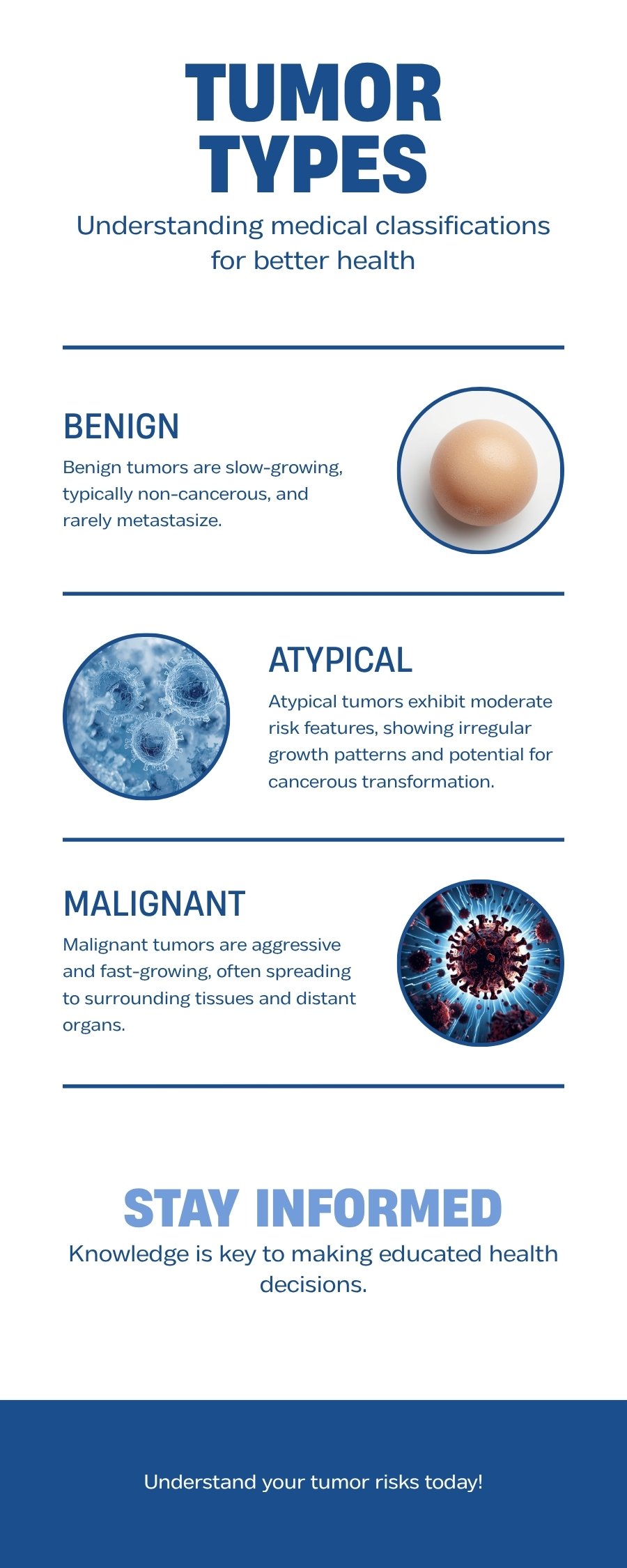
Grade I Meningioma — Benign
Approximately 80% of all meningiomas
Characteristics
- • Slow-growing, well-defined borders
- • Normal-appearing cells under microscope
- • Rarely invades brain tissue
- • Responds well to complete resection
- • Does not spread to other organs
Treatment
- • Watch-and-wait if small and asymptomatic
- • Surgical resection if symptomatic or growing
- • Radiation rarely needed after complete removal
- • Annual MRI surveillance recommended
Lawsuit Impact
- • All surgeries and surveillance costs recoverable
- • 7–25% recurrence adds future medical damages
- • Cognitive symptoms still compensable
- • Lower tier in MDL allocation vs. Grade II/III
- • Still a valid, compensable claim
Grade II Meningioma — Atypical
Approximately 15–18% of all meningiomas
Characteristics
- • Also called "atypical meningioma"
- • Faster growth rate than Grade I
- • Abnormal cell division under microscope
- • May invade surrounding brain tissue
- • Significantly higher recurrence rate
Treatment
- • Aggressive surgical resection standard
- • Radiation therapy often recommended post-surgery
- • More frequent MRI follow-up (every 3–6 months)
- • May require re-surgery if recurrence occurs
Lawsuit Impact
- • Higher damage tier than Grade I in MDL
- • 29–52% recurrence adds future medical costs
- • Combined surgery + radiation damages
- • Greater cognitive impairment documented
- • Stronger pain and suffering component
Grade III Meningioma — Anaplastic/Malignant
Approximately 1–3% of all meningiomas
Characteristics
- • Also called "anaplastic" or "malignant"
- • Aggressive, rapidly growing
- • Invades brain and surrounding structures
- • Can spread beyond the meninges
- • Poorest prognosis of all grades
Treatment
- • Maximum surgical resection attempted
- • Radiation therapy always recommended
- • Chemotherapy in some cases
- • Palliative care may be part of plan
- • Very frequent MRI monitoring
Lawsuit Impact
- • Highest damage tier in MDL allocation
- • 50–78% recurrence with ongoing medical costs
- • Life expectancy impacts are compensable
- • Wrongful death claims possible for families
- • Maximum pain and suffering damages
Recurrence Rates: The Long-Term Burden by Grade
| Grade | 5-Year Recurrence | 10-Year Recurrence | What Recurrence Means for Your Case |
|---|---|---|---|
| Grade I (Benign) | 7–15% | 20–25% | Re-surgery or radiation; ongoing imaging costs added to damages |
| Grade II (Atypical) | 29–52% | 40–60% | High likelihood of additional surgeries; substantial future medical damages |
| Grade III (Malignant) | 50–78% | 78%+ | Ongoing aggressive treatment; life expectancy impact; highest damage tier |
Frequently Asked Questions
Does my meningioma grade affect my Depo-Provera settlement amount?
Can a Grade I meningioma still qualify for a Depo-Provera lawsuit?
My pathology report says "atypical meningioma" — is that Grade II?
What if I was only monitored and never needed surgery?
What percentage of meningiomas are Grade I versus Grade II versus Grade III?
Does tumor size matter as much as grade for my lawsuit?
Related Depo-Provera Legal Guides
Meningioma Surgery: What to Expect
Before, during, and after craniotomy for Depo-Provera linked meningioma — and how surgery costs become recoverable damages.
Symptoms GuideBrain Fog and Cognitive Symptoms
The cognitive symptoms of meningioma nobody warned you about — and how each symptom adds to your case value.
Action GuideJust Diagnosed? Your 30-Day Action Plan
Step-by-step guidance for the critical first 30 days after a meningioma diagnosis linked to Depo-Provera.
Evidence GuideWhat Evidence Do You Need?
Pathology reports, pharmacy records, and imaging documentation your attorney needs for a strong case.
Grade I, II, or III — Every Meningioma Linked to Depo-Provera Has Value.
Your grade shapes your case value, but any meningioma diagnosis after Depo-Provera use may qualify. A free 20-minute consultation tells you exactly where you stand — at no cost and no obligation.
Get Your Free Case Review →Contingency fee — you pay nothing unless we win. No upfront costs. No obligation.