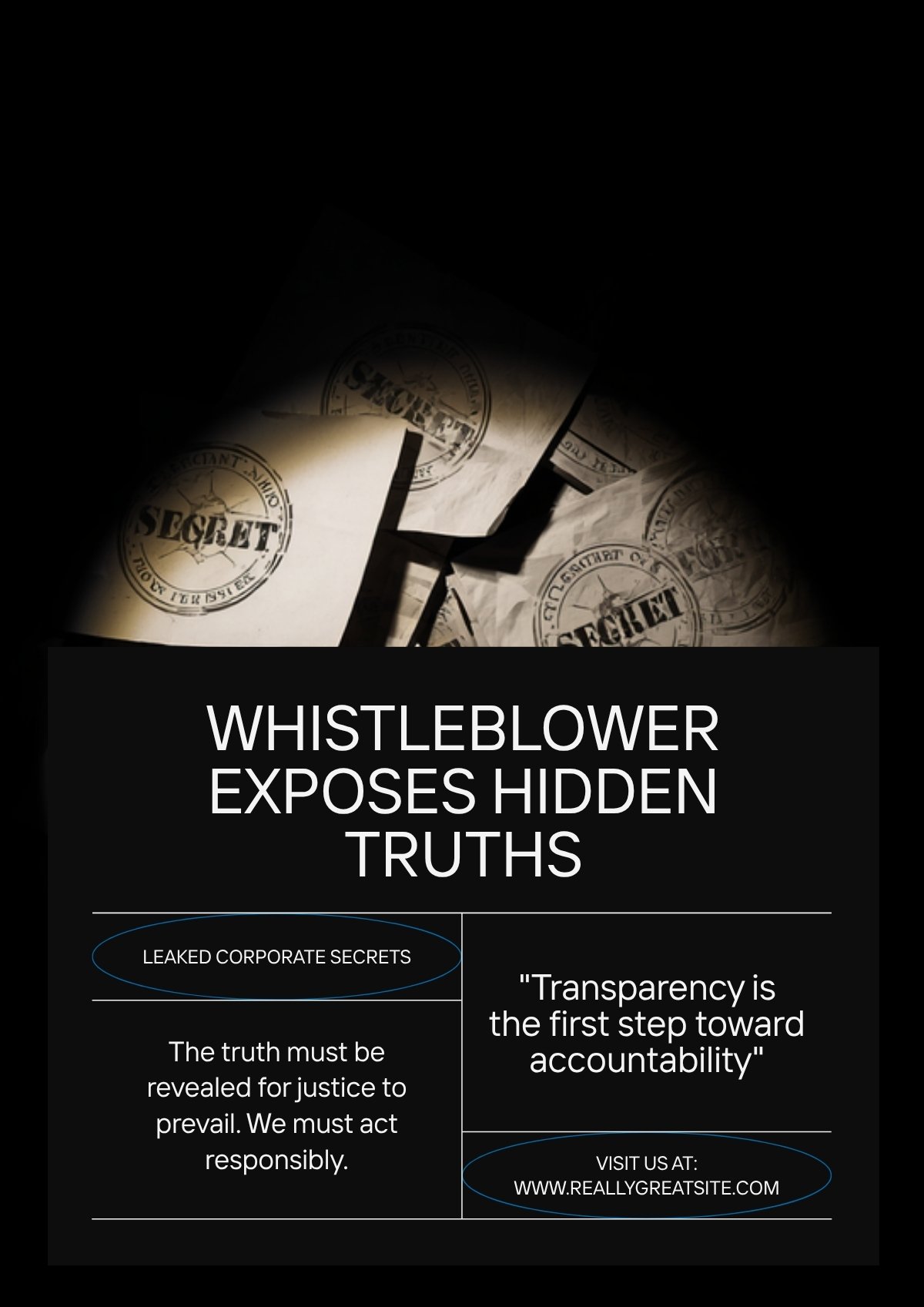
What Johnson & Johnson Knew About Asbestos in Talc — The 50-Year Paper Trail
Published May 8, 2026
The Short Answer
Johnson & Johnson's own internal documents show the company detected asbestos in its talcum powder supply as early as 1957 — more than 60 years before the public learned about it. A 2018 Reuters investigation exposed memos, test results, and board-level discussions spanning five decades that showed what J&J knew, when they knew it, and what they chose not to say.
Gloria T. was 61 years old when she was diagnosed with ovarian cancer, in 2021. She had used Johnson & Johnson Baby Powder for personal hygiene since she was a teenager — a habit she picked up from her mother, who had used it since the 1960s. Her doctor delivered the diagnosis on a Tuesday. By Thursday, she was back home, sitting at her kitchen table, unable to sleep at 2 a.m., when she opened her phone and started searching.
That's when she found the 2018 Reuters article.
She read it twice. Then she printed it out and read it a third time with a highlighter. The article cited Johnson & Johnson's own internal documents — memos from the 1950s, lab results from the 1970s, board discussions from the 1980s — showing that company scientists had detected asbestos fibers in Baby Powder samples and that executives knew. She had been using the product for 45 years. No one had ever told her.
"They knew when my mother started using it," Gloria said later. "They knew when I started. They knew the whole time."
"The documents don't lie. They detected asbestos in 1957 and kept selling it for fifty more years. That's not a mistake. That's a decision." — Plaintiffs' attorney argument, talcum powder MDL hearing
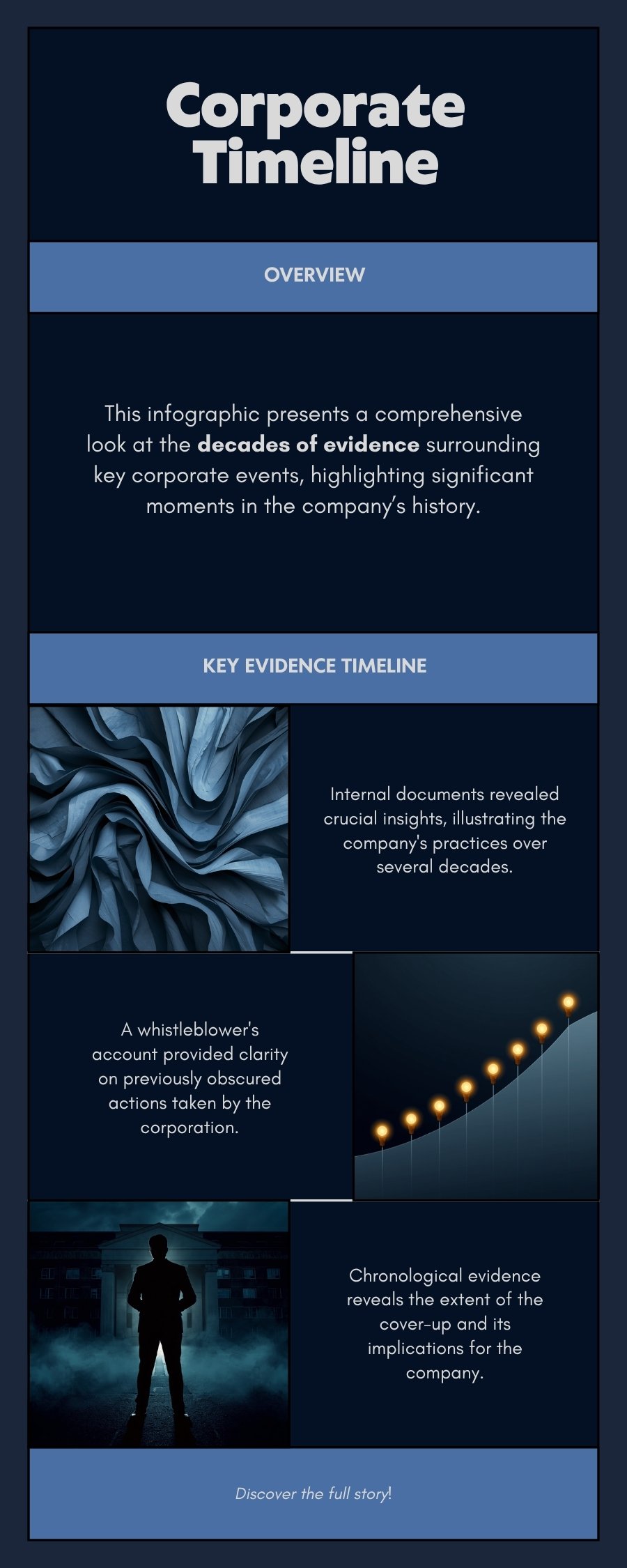
The Evidence: A Timeline of What J&J Knew
The following dates are drawn from internal Johnson & Johnson documents, FDA records, and investigative journalism. The documents were initially shielded from public view through privilege claims before being released during litigation.
First Internal Asbestos Detection
Internal J&J documents reveal that company scientists and contracted researchers first detected asbestos contamination in talc samples. These findings were not shared publicly, were not reported to regulators, and did not trigger any changes to product labeling or warnings. This was six years before the federal government began restricting asbestos use in other industries.
The Windsor Minerals Memo
A memo from Windsor Minerals — J&J's primary talc supplier in Vermont — explicitly documented asbestos contamination in mined talc. The memo recommended limiting the number of tests performed on talc samples, a move that critics say was designed to minimize the paper trail. Windsor Minerals supplied J&J with talc from Vermont mines until the 1980s, and internal documents show J&J was aware of the contamination at the supplier level.
J&J Scientist's Private Test — Never Made Public
A Johnson & Johnson scientist conducted independent tests on Baby Powder samples and found asbestos fibers present. Per internal records, those results were never published, never filed with regulators, and never disclosed to consumers. The scientist's findings were instead discussed in internal correspondence that would remain confidential for more than four decades.
Board-Level Awareness — Decades of Continued Sales
Reuters' review of J&J documents found board-level discussions about the asbestos issue during the 1980s, as asbestos litigation exploded in the U.S. and public awareness of asbestos-related diseases grew. Despite this awareness at the highest levels of the company, J&J continued to market Baby Powder without any asbestos warnings for another four decades.
Reuters Bombshell Investigation — The Cover-Up Exposed
In December 2018, Reuters published a landmark investigation based on internal J&J documents, including memos, test results, and meeting minutes spanning from the 1950s to the 1990s. The reporting showed J&J's talcum powder sometimes tested positive for asbestos and that the company knew for decades. J&J's stock dropped 10% the day the story published. The investigation triggered congressional inquiries and accelerated thousands of lawsuits already in the courts.
FDA Finds Asbestos — J&J Recalls 33,000 Bottles
In October 2019, the FDA announced it had independently tested a sample of Johnson & Johnson Baby Powder purchased from an online retailer and found chrysotile asbestos. J&J announced a voluntary recall of approximately 33,000 bottles from lot number 22318RB. It was the first time J&J had ever recalled its talcum powder. J&J disputed the FDA's testing methodology but could not dispute the agency's findings.
Product Discontinued — Litigation Continues
J&J announced it would discontinue talc-based Baby Powder in the United States and Canada in May 2020, citing "misinformation" and "unfounded" claims — not safety concerns. A global discontinuation followed in 2023. But discontinuation did not end J&J's legal exposure. Courts have ruled that a manufacturer cannot escape liability simply by stopping sales of a defective product after injuries have already occurred.
The 8,000+ Documents: What Was Hidden Behind Privilege
During talcum powder litigation, Johnson & Johnson initially claimed attorney-client privilege over thousands of internal documents, preventing plaintiffs from seeing them. Courts ruled against J&J on many of those privilege claims, ordering the release of more than 8,000 documents that had been kept from plaintiffs for years.
Internal Test Results
Lab reports and mineral analyses showing asbestos fibers detected in Baby Powder samples at various points between the 1950s and 1990s — results that were never disclosed to regulators or consumers.
Executive Memos
Internal correspondence between J&J executives, scientists, and legal counsel discussing asbestos contamination, how to handle testing disclosures, and what information should be limited from public knowledge.
Board Meeting Minutes
Records of board-level discussions about asbestos liability and talc contamination, demonstrating awareness at the company's highest decision-making level rather than limited knowledge at the laboratory level.
Why This Matters Legally: The "What Did They Know" Standard
In product liability law, what a manufacturer knew — and when — is central to determining both liability and damages. The internal document record matters in two critical ways.
Compensatory Damages
Compensatory damages cover the harm caused: medical bills, lost income, pain and suffering. J&J's knowledge of asbestos contamination strengthens the duty-to-warn argument — that J&J had a legal obligation to tell users about a known risk and failed to do so. A failure to warn claim doesn't require proving J&J intended to harm anyone — only that they knew of a risk and concealed it.
Punitive Damages
Punitive damages are awarded to punish intentional or reckless misconduct. The internal document evidence — memos showing executives knew, decisions to limit testing, 50 years without disclosure — is precisely the kind of evidence that juries use to justify large punitive awards. The landmark Missouri verdict included over $4 billion in punitive damages against J&J.
Historical Verdicts Grounded in the Document Record
Courts have allowed plaintiffs to introduce decades-old internal J&J documents at trial. The results speak for themselves:
| Case | Year | Verdict | Key Evidence Used |
|---|---|---|---|
| Missouri (Imerys) | 2018 | $4.69 Billion | Internal memos; failure to warn |
| Anderson v. J&J | 2019 | $325 Million | Lab test results; executive memos |
| Lanzo v. J&J | 2018 | $117 Million | Asbestos concealment; privileged docs |
| Slemp v. J&J | 2017 | $110 Million | Windsor Minerals memo; test concealment |
J&J's Public Response — and Why It Matters to Your Case
Johnson & Johnson has denied wrongdoing throughout the litigation. Their public statements have followed a consistent pattern — and courts have repeatedly rejected each defense argument:
J&J's Claim: "Our product is safe and has been tested thousands of times."
Court reality: Testing methodology has been disputed by independent scientists and the FDA. Courts have found that J&J's own testing protocols were designed to minimize positive detections of asbestos — not to comprehensively detect it.
J&J's Claim: "Ovarian cancer is caused by many factors unrelated to talc."
Court reality: Juries have found in favor of plaintiffs even where J&J presented alternative causation arguments. The legal standard is substantial contributing factor — not sole cause — and the internal evidence of a known risk has been enough to meet that standard in multiple trials.
J&J's Claim: "We discontinued Baby Powder because of misinformation, not safety."
Court reality: Courts have rejected this framing. Discontinuation of a product after harm has occurred does not extinguish liability for the harm caused during the years the product was sold without warning.
How the Document Record Affects Your Case Today
If you used J&J talcum powder and developed ovarian cancer or mesothelioma, the 50-year document trail works in your favor in three concrete ways:
Establishes Knowledge
You do not have to prove J&J knew — they have already been proven to have known since 1957. The document record removes one of the hardest elements to establish in a product liability case.
Supports Failure to Warn
Courts have held that J&J had a duty to warn consumers about the asbestos risk. The internal evidence proves both that the risk was known and that the duty was breached — a near-complete failure-to-warn case.
Justifies Punitive Damages
The deliberate concealment documented in the paper trail is exactly the kind of malicious or reckless conduct that entitles juries to add punitive damages on top of compensatory awards — sometimes by a multiple of 10 or more.
Related Articles
Mesothelioma
Talcum Powder and Mesothelioma: The Asbestos Hidden in Baby Powder for Decades
Asbestos
Talcum Powder Asbestos Contamination: How It Happens and What It Means
Legal Strategy
J&J's Bankruptcy Shield Was Rejected — What That Means for Talc Victims
Lawsuit History
Johnson & Johnson Talc Lawsuit History: From the First Verdict to Today
Frequently Asked Questions
When did Johnson & Johnson first discover asbestos in its talcum powder?
What did the 2018 Reuters investigation reveal about Johnson & Johnson?
Did the FDA ever find asbestos in Johnson & Johnson Baby Powder?
Can J&J's internal documents help my lawsuit?
Is it too late to file a talcum powder lawsuit based on J&J's concealment?
What happened to the 8,000+ privileged documents released in talc litigation?
They Hid It for 50 Years. You Deserve to Know Your Rights.
If you used Johnson & Johnson Baby Powder and were diagnosed with ovarian cancer or mesothelioma, the evidence of what J&J knew is already on the record. A free consultation with a mass tort attorney can tell you whether your case qualifies — and there's no cost unless you win.
$0 upfront · Contingency fee — no win, no fee · Free case evaluation