
If abuse is happening right now
Contact the NCMEC CyberTipline at 1-800-843-5678 or report at cybertipline.org. Do not confront the suspected predator before speaking with law enforcement — this can destroy evidence and escalate danger.
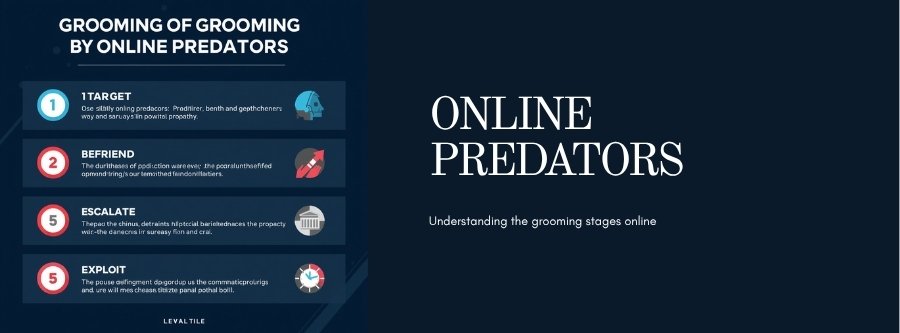
The 5-Stage Snapchat Grooming Pipeline
Research from the Internet Watch Foundation, NCMEC, and testimony in child exploitation prosecutions documents a consistent grooming progression. Understanding the pipeline helps parents recognize which stage may be occurring.
Early Stage Red Flags (Signs 1–4)
These appear during targeting and befriending — when contact has been made but harm has not yet escalated. Early detection is most effective here.
Your child has added someone with no mutual real-world friends. When asked "who is that?", the explanation is vague — "just someone from Snap," "a gamer," "a friend of a friend" — but cannot be tied to any school, activity, or known social circle.
Snapchat streaks (consecutive daily snaps) create dependency and habit. A predator uses streaks to normalize daily contact. Watch for a child who becomes anxious about losing a streak with one specific contact they cannot clearly identify.
The Snap Score reflects total snaps sent and received. A child with an extremely high score relative to their friend count — especially concentrated with one contact — indicates heavy one-on-one Snap exchange that warrants conversation.
Predators invest time being the most empathetic person in a child's life — listening to school problems, family frustrations, and emotional struggles. If your child says things like "they always get me" or "they never judge me" about someone they've never met in person, this is a deliberate grooming technique.
Active Grooming Red Flags (Signs 5–8)
These appear during the isolate and escalate stages. Harm may not have occurred yet, but the relationship has been deliberately deepened.
Suddenly tilting the phone away when you approach, lowering brightness or volume, or leaving the room to use Snapchat — behaviors that represent a significant change from previous open usage. Children at this stage often believe the relationship is "special" and must be protected from parents.
Gift cards to Amazon, gaming credits, Venmo or CashApp transfers from unknown senders. "Gift-giving" is a documented grooming technique — it creates perceived obligation and debt in the child's mind. Ask about any unexplained gifts immediately.
Predators deliberately create tension between the child and their real-world support network — subtly criticizing friends and family, encouraging the child to spend more time with the "online friend" instead. Watch for unexplained loss of interest in activities, school friends, or family time coinciding with heavy Snapchat use.
Children who are being groomed begin to mirror the vocabulary and framing introduced by the predator. If your child uses sexual terms, discusses adult topics casually, or references experiences they should not have knowledge of — this can indicate deliberate exposure to adult content as a desensitization technique.
High-Urgency Red Flags (Signs 9–12)
These indicate escalation or active exploitation. Treat any of these as requiring immediate action.
Signs of fear, crying, nightmares, or refusal to look at their phone — particularly when a specific contact's name is mentioned. This emotional response often indicates the relationship has shifted from grooming to blackmail or coercion. Do not dismiss it as "teen drama."
A child who describes, alludes to, or draws images suggesting sexual content they could only have encountered through explicit material. Groomers use pornographic content to desensitize children and normalize requests for images in return.
Any discussion of meeting a Snapchat contact in person — including mentions of "they're going to be nearby" or "they want to meet at the mall" — requires immediate intervention. In-person meetings with online predators carry the highest risk of physical harm.
Behavioral changes that mirror trauma responses — bed-wetting in younger children, sudden academic decline, self-harm, social withdrawal, aggression, or statements suggesting shame or guilt — can indicate abuse has already occurred and the child has not disclosed it.
What to Do If You Spot These Warning Signs
Your reaction will determine whether your child opens up or shuts down. Approach without accusation. Screenshot everything visible — friend lists, usernames, any accessible chat history — before the predator can delete the account.
File a report at cybertipline.org. Contact your local police and ask for the Internet Crimes Against Children (ICAC) task force. Request that they contact Snap Inc. directly for data preservation — platforms respond faster to law enforcement requests than to parents.
A trauma-informed therapist can help your child process what happened in a safe, non-judgmental environment. Children who receive professional support disclose more completely and recover more effectively. Your child's wellbeing comes before the legal case.
If Snapchat's platform design enabled the harm your child experienced, your family may have legal options separate from any criminal case. Civil lawsuits hold the platform accountable — not just the individual predator. A free consultation costs nothing and takes less than 30 minutes.
Related Snapchat Safety Guides
Frequently Asked Questions
How do predators typically first contact children on Snapchat?
Predators use several methods: Quick Add (Snapchat's friend suggestion feature), finding usernames shared on other social platforms like TikTok or Instagram, joining group chats where minors participate, or using proximity-based features. Initial contact is usually friendly and low-pressure — complimenting appearance, sharing interests, or offering in-game help.
What does grooming look like on Snapchat specifically?
Snapchat grooming typically follows a pattern: first befriending through casual conversation, then moving to daily streaks to create dependency, then isolating by discouraging offline friends, then using disappearing snaps to test boundaries with mildly inappropriate content, then escalating toward explicit material or in-person meeting requests.
Should I confront my child if I suspect grooming?
Do not confront immediately. First, preserve any evidence you can see. Approach your child calmly and without accusation, framing the conversation around safety rather than punishment. If you believe abuse has already occurred, contact the NCMEC CyberTipline before confronting the suspected predator.
Can I see deleted Snapchat messages?
Standard Snapchat messages disappear after viewing and cannot be recovered through normal means. However, digital forensics experts retained by attorneys in child exploitation cases have methods to recover metadata and cached data. This is why reporting quickly and not deleting anything is critical.
Did You Recognize Any of These Warning Signs?
If your child was harmed through Snapchat, a free case review can help you understand your legal options. No upfront cost, no obligation.
Get a Free Case Review